
Specialises in hidden gems, isekai, and anything with great world-building.
Horror is a small niche within anime compared to the sea of shonen action and rom-coms, but the shows that do commit to it use tools live-action horror simply doesn't have — unrestricted imagery, unsettling art direction, and the freedom to make bodies and spaces do things a practical effects budget never could. If you think anime can't actually be scary, these are the shows to test that assumption on.
Psychological Horror
This is where anime horror is arguably strongest, because animation can visualize a character's deteriorating grip on reality directly rather than implying it.
- Perfect Blue (1997, dir. Satoshi Kon) follows a pop idol turned actress being stalked while her own sense of what's real starts fracturing. Its editing — cutting between "performance," "reality," and delusion without clear signposting — is so influential that Darren Aronofsky has cited it as a direct reference for Black Swan and reportedly licensed a shot from it for Requiem for a Dream.
- Monster (2004-05, Madhouse, based on Naoki Urasawa's manga) doesn't rely on jump scares at all — its horror comes entirely from Johan Liebert, a killer whose motives stay genuinely opaque for most of the show's 74-episode run, which is unusually long for the genre and lets the dread build slowly rather than through shock.
- Paranoia Agent (2004), also Satoshi Kon, uses a roller-skating attacker known as "Lil' Slugger" as a lens to examine collective urban anxiety, with each episode following a different character whose personal breakdown seems to summon the attacker.
Body Horror and the Uncanny
- Junji Ito Collection (2018) adapts the manga artist most responsible for anime/manga body horror's reputation — his spiral-obsession story Uzumaki has been influential enough to get its own separate, long-delayed adaptation, and stories like "The Enigma of Amigara Fault" (about human-shaped holes in a mountainside) are frequently cited as some of his most disturbing standalone work.
- Parasyte -the maxim- (2014-15, Madhouse) opens with an alien parasite failing to fully take over the protagonist's brain and settling for his right hand instead — turning a body part into an independent, shape-shifting threat he has to cooperate with to survive.
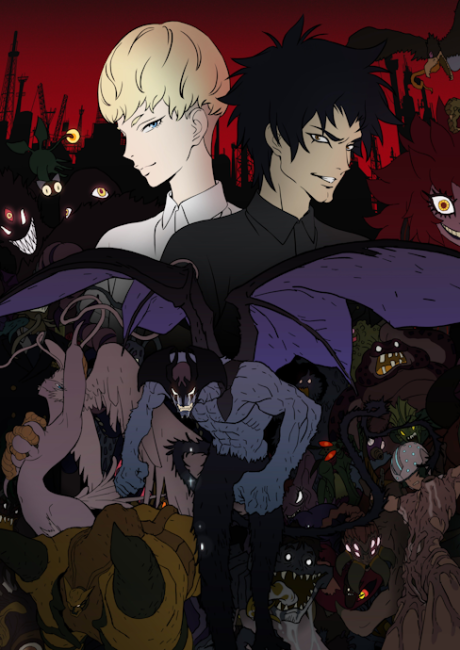
- Devilman Crybaby (2018, Science SARU, dir. Masaaki Yuasa) escalates from body horror into full societal collapse; its back half depicts mob violence against suspected demons with a bluntness that's rare even by horror anime standards.
Supernatural and Folklore-Based Horror
- Mononoke (2007) uses a deliberately flat, ukiyo-e-influenced art style and sliding-paper-screen compositions rather than realism, which makes its yokai investigations feel more like moving folk paintings than a typical anime — a visual choice that's still unusual today.
- Shiki (2010, Daume) is a slow-burn vampire outbreak story set in an isolated mountain village, notable for spending real time on both the villagers and the vampires' perspectives, so the horror isn't just "monsters attack" but a genuine moral standoff over who gets to survive.
- Higurashi: When They Cry (2006) repeats the same few days in a rural village from different characters' viewpoints, each loop revealing a little more of why the town is hiding something — its early "cute slice of life that turns violent without warning" structure became a genre reference point in its own right.
Horror in Disguise
- Made in Abyss (2017, Kinema Citrus) looks like a whimsical adventure about children exploring a fantasy pit — until the "Curse of the Abyss" mechanic, which inflicts escalating physical torment on anyone ascending from deep layers, turns entire episodes into some of the more genuinely disturbing content in modern anime, precisely because the cute art style doesn't prepare you for it.
- Another (2012, P.A. Works) is closer to a slasher whodunit — a cursed classroom where students die in increasingly elaborate, almost Final Destination-style accidents — and it earns comparisons to Japanese horror films like Ring for its atmosphere of a curse nobody can quite name.
Quick Comparison
| Anime | Subgenre | What makes it distinct |
|---|---|---|
| Perfect Blue | Psychological | Reality/fiction editing blur, cited by Aronofsky |
| Monster | Slow-burn thriller | 74 episodes, no clear villain motive |
| Parasyte | Body horror | Parasite cohabiting the protagonist's hand |
| Mononoke | Supernatural | Ukiyo-e-inspired flat art style |
| Made in Abyss | Horror-in-disguise | Cute art hiding brutal body-horror stakes |
Why Animation Works So Well for Horror
Live-action horror is constrained by what's practical to film. Anime isn't — a hallway can warp, a character's face can distort into something anatomically impossible, and none of it requires a visual-effects budget, just a director willing to commit to it. That's part of why Satoshi Kon's films get cited outside anime circles at all: the technique itself, not just the story, does work live-action couldn't easily replicate.
Where to Start
If you want a manageable entry point, start with Perfect Blue (a single 81-minute film) or Another (12 episodes, straightforward mystery structure) before committing to something as long as Monster or Higurashi. If body horror is more your speed than psychological dread, Parasyte and Junji Ito Collection are shorter, self-contained ways to test your tolerance. Whichever you pick, go in at night, with the lights off — these shows are built for exactly that.
The Directors Behind the Dread
It's worth naming the people responsible for anime horror's best work, because a handful of directors and studios show up again and again. Satoshi Kon, who died in 2010, directed only four feature films (Perfect Blue, Millennium Actress, Tokyo Godfathers, and Paprika) plus the Paranoia Agent TV series, and his entire filmography deals with the instability of perceived reality — watching them together makes clear how deliberately he refined the same idea across a decade. Naoki Urasawa, the manga artist behind Monster, is also responsible for 20th Century Boys, and both works share his interest in ordinary people slowly realizing they're at the center of something much larger and darker than they assumed. Junji Ito's manga has been adapted multiple times with mixed results — the 2018 Junji Ito Collection was criticized by some fans for uneven animation quality on a modest budget, but it remains the most accessible way to sample a wide range of his short stories in one place rather than tracking down individual manga volumes.
A Few More Worth Your Time
- Boogiepop Phantom (2000) predates a lot of the psychological-horror anime on this list and uses a fragmented, non-chronological structure across its 12 episodes to slowly assemble a picture of a serial-killer-adjacent urban legend — it's dense and was notoriously hard to find for years, but influenced later shows including Paranoia Agent.
- Elfen Lied (2004) leans harder into graphic violence than most entries here, opening with a prison-break sequence involving invisible telekinetic limbs that remains one of anime's most infamous cold opens, though its horror is more visceral than psychological.
- Hell Girl (2005) structures itself as a "curse of the week" show, where wronged people can summon a girl named Ai Enma to send their tormentor to hell — at the cost of the summoner's own soul going there too after death, a built-in moral cost that keeps the premise from feeling like simple wish fulfillment.
A Practical Warning
A genuine content note is worth including here rather than glossing over: several of these shows go further than typical anime in depicting self-harm, animal death, and sustained psychological abuse — Perfect Blue, Devilman Crybaby, and Made in Abyss in particular have specific scenes that catch newcomers off guard precisely because the surrounding art style or premise doesn't telegraph it. If you're horror-curious but cautious, it's reasonable to look up specific episode content warnings before diving into the denser entries on this list.